Wondering what daily life in Bremerton actually feels like before you make a move? That is one of the smartest questions you can ask, because in Bremerton, your day-to-day experience is shaped as much by ferry schedules, work location, and housing type as it is by price. If you are relocating to Bremerton, this guide will help you understand how people commute, where housing tends to cluster, and what kind of lifestyle different parts of the city support. Let’s dive in.
Why Bremerton draws relocators
Bremerton is a waterfront city of about 45,291 residents, and it offers a mix that can be hard to find in one place. You have downtown waterfront access, ferry connections to Seattle, major regional employers, and housing options that range from older single-family homes to condos, apartments, and newer redevelopment areas.
Daily life also does not revolve around just one traditional downtown pattern. The city organizes growth around several key centers, including Downtown, Harrison Heights, Charleston, Manette, and PSIC-Bremerton, with multifamily investment also targeted in places like Bay Vista and Wheaton-Riddell/Wheaton-Sheridan. For you as a buyer, that means Bremerton can feel very different depending on which part of the city you choose.
Daily life in Bremerton
Bremerton’s everyday rhythm is closely tied to the water, the ferry terminal, and a few well-defined activity hubs. Downtown Harborside brings together the ferry dock, boardwalk, marina, museum cluster, Arts District, and other waterfront amenities, while Manette adds its own cafes, shopping, and neighborhood-serving businesses near the bridge.
If you want outdoor time built into your routine, Bremerton also offers practical recreation options like Evergreen Rotary Park and Gold Mountain Golf Course. For many people moving here, that balance matters. You can have an urban waterfront setting in some areas, while still staying connected to parks, regional routes, and established residential pockets.
Commutes in Bremerton
Your commute plan should be one of the first things you sort out before buying. Bremerton works especially well if you are comfortable with a ferry-based Seattle commute or if your job is in Kitsap County or along the Tacoma, Gorst, or Silverdale corridor.
Ferry commute to Seattle
Bremerton is one of the clearest ferry-commute cities in the region. Washington State Ferries lists the Seattle to Bremerton crossing at about 60 minutes, and Kitsap Transit’s Bremerton Fast Ferry makes the Bremerton to Seattle trip in about 30 minutes. Both leave from Bremerton Harborside at the main ferry terminal dock.
That setup can be a major advantage if you want access to Seattle without living there full time. But it also means your housing search should match how often you expect to use the ferry. If you are commuting several times a week, being close to downtown transit access may matter more than having extra distance from the terminal.
Local and regional driving routes
If you drive more often than you ferry, Bremerton’s main road network matters just as much. SR 3 is the primary limited-access highway on the Kitsap Peninsula, while SR 304 and SR 310 serve downtown, Naval Base Kitsap-Bremerton, and the ferry terminal. SR 303 connects downtown to East Bremerton and Silverdale, and SR 16 extends east of Gorst toward Tacoma.
In real life, that means different parts of Bremerton make more sense depending on where you work. A Tacoma-bound commuter may prioritize easy highway access, while someone working near downtown Bremerton or the ferry terminal may want a location that cuts down on daily car time.
Jobs and commuter patterns
Bremerton has meaningful local employment, but it is also a city with strong commuter flows in both directions. The city’s housing appendix reports that 82% of jobs in Bremerton are filled by commuters from outside the city, while 80% of Bremerton residents work outside the city. Among external work destinations, Seattle accounts for 16%, Silverdale 7%, and Tacoma 5%.
The city’s economy remains anchored by major employers such as Naval Base Kitsap, Puget Sound Naval Shipyard, Olympic College, and health care institutions. Kitsap Economic Development Alliance describes Naval Base Kitsap as the county’s largest employer and a major economic engine, with roughly 20,000 civilian personnel, 11,000 military personnel, and thousands of contractors.
Census data puts Bremerton’s mean travel time to work at 25.3 minutes. That figure reflects a city where some residents work locally while others build daily life around ferries, base access, or regional highway travel.
What the housing mix looks like
Bremerton’s housing stock is more mixed and generally older than the countywide pattern. The city’s 2024 housing appendix estimates 19,399 housing units, and 47% of Bremerton structures are multi-unit, compared with 23% in Kitsap County.
The age of the housing stock is also important. According to the city, 36% of occupied units were built before 1950, 23% were built from 1960 to 1979, 18% from 1980 to 1999, and 14.7% since 2000. If you are relocating from an area with mostly newer subdivisions, Bremerton may feel more varied, with older homes, infill development, condos, apartments, and redevelopment zones all existing in the same city.
QuickFacts adds useful cost context. Bremerton has a 48.1% owner-occupied rate, a median owner value of $439,400, median selected monthly owner costs with a mortgage of $1,994, and a median gross rent of $1,641.
Home prices and budget planning
For current directional pricing, Zillow’s April 30, 2026 data shows a Bremerton home value index of $486,599, a median sale price of $453,167, and median days to pending of 8. That short time to pending suggests you should be prepared to move decisively when the right property appears.
ZIP-code-level values also show a noticeable spread. Zillow reports about $396,676 in 98337, $465,300 in 98310, $499,865 in 98312, and $513,638 in 98311. These are best used as broad price bands, not exact neighborhood comparisons, because ZIP codes do not line up neatly with neighborhood boundaries.
For relocation planning, this tells you two important things:
- Bremerton offers a range of price points, but where you land often depends on commute priorities, housing age, and proximity to growth centers.
- You will likely need to weigh trade-offs, such as newer housing versus closer ferry access, or more space versus a shorter drive to work.
Where to focus your home search
Bremerton is easier to understand when you look at it as a group of micro-areas instead of one uniform market. Here is how to think about the main areas mentioned in city planning materials.
Downtown and Harborside
Downtown Bremerton is the city’s civic and cultural core. It includes dense housing, transit access, the ferry terminal, the Arts District, the boardwalk, the museum cluster, marina access, and other waterfront amenities.
If you want condo, apartment, or mixed-use living with the easiest access to ferry travel, this is often the clearest fit. It can make especially good sense if your routine centers on Seattle trips, car-light living, or being close to the waterfront and downtown activity.
Manette and East Bremerton
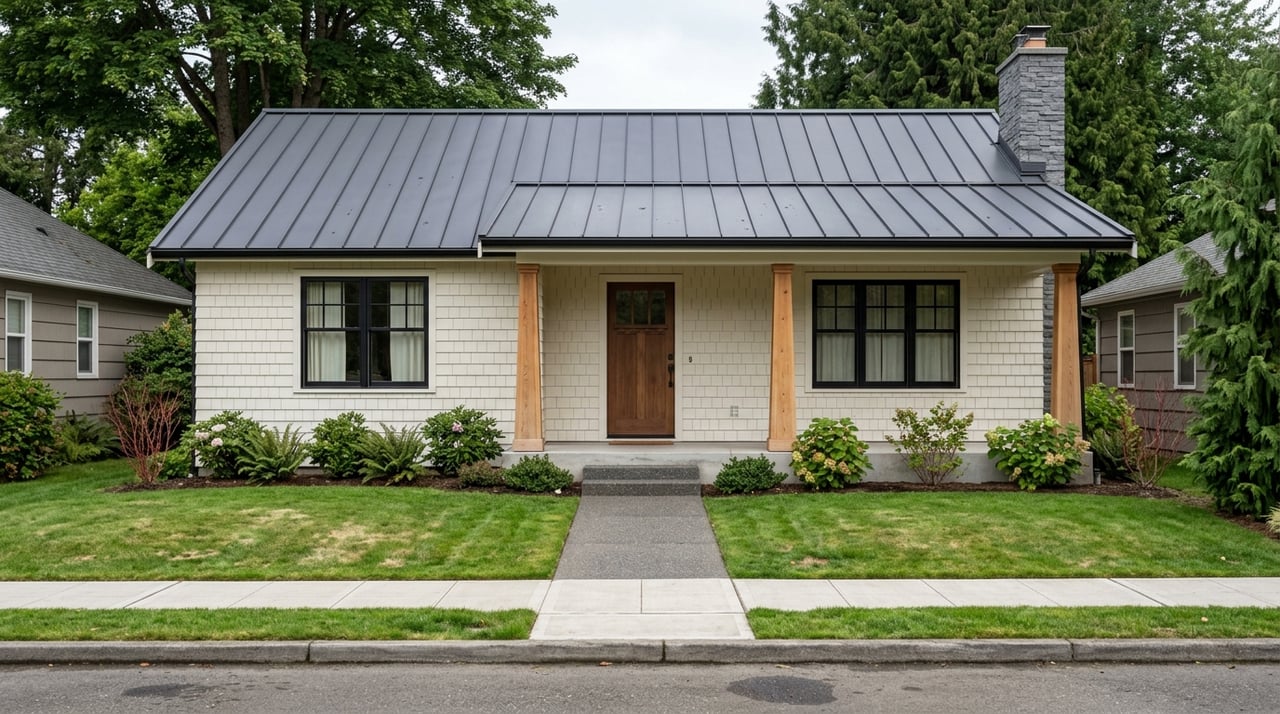
Manette is identified by the city as a neighborhood center, and it offers bridge access, local cafes, shopping, and a more established residential fabric. This part of Bremerton is one of the better areas to look if you are drawn to older single-family housing and a more established neighborhood feel.
Because Bremerton has a large share of pre-1950 housing, this area is where you are more likely to encounter that older-home character many buyers associate with the city. If you like homes with history and want to stay connected to both local businesses and downtown access, this area is worth a close look.
Harrison Heights
Harrison Heights, renamed from Eastside Village in 2024, is an 80-acre center planned for focused mixed growth. The city describes it as an area for commercial and multifamily residential uses, making it one of the stronger references for newer infill and higher-density housing.
If your priority is finding something that feels more recently developed or more urban in layout, Harrison Heights may fit your search. It is a useful area to watch if you want a location tied to Bremerton’s future growth pattern.
Bay Vista and Westpark
Bay Vista and Westpark tell an important part of Bremerton’s redevelopment story. Westpark began in 1941 as temporary housing for shipyard workers, and the city now plans the area as an urban mixed-use, mixed-income, pedestrian-oriented community.
For you as a buyer, this matters because it shows where replacement housing and long-term redevelopment are part of the city’s planning focus. It is a strong example of how Bremerton’s housing growth is being directed rather than spread evenly across all parts of the city.
East Park
East Park is a 47-acre residential redevelopment area between the Harrison hospital district and Manette. The city frames it as an example of new residential community development on the east side.
If you are looking for a newer residential option in East Bremerton, East Park is one of the clearest places to include in your search. It can be especially useful if you want to balance east-side location preferences with newer housing opportunities.
Charleston and PSIC-Bremerton
Charleston is a district center in the city’s growth strategy, while PSIC-Bremerton is the manufacturing and industrial center. This part of Bremerton is especially relevant if you want proximity to shipyard-adjacent employment areas and practical regional highway access.
For some buyers, this area is less about waterfront lifestyle and more about everyday convenience. If your work is tied to industrial or employment-heavy parts of the city, location efficiency may outweigh other lifestyle features.
How to decide if Bremerton fits you
Bremerton is not a one-size-fits-all city, and that is part of its appeal. It can work well for a ferry commuter, a buyer who wants an older home in an established area, someone looking for condo or apartment living near downtown, or a household that needs access to major local employers.
The key is to match your move to your real daily routine. Before you buy, think through questions like:
- How often will you commute to Seattle?
- Do you want to be near the ferry terminal?
- Are you comfortable with older housing stock?
- Would you prefer a newer redevelopment area?
- Is your job in Bremerton, Silverdale, Tacoma, or elsewhere in Kitsap County?
- Do you want a denser urban setting or a more established residential area?
Those answers usually narrow the search faster than price alone. In Bremerton, commute logic and housing style are deeply connected.
A smart relocation strategy
If you are moving to Bremerton from outside the area, it helps to approach the search in phases. Start with your commute and lifestyle needs, then narrow by housing type and budget, and finally compare micro-areas that line up with your priorities.
That kind of step-by-step approach can save you time and reduce second-guessing. It also helps you avoid choosing a home that looks right on paper but does not support the way you actually plan to live.
If you are planning a move to Bremerton and want calm, practical guidance on neighborhoods, commute trade-offs, and housing options, Stephanie Patrick can help you make a more confident move.
FAQs
What is daily life like in Bremerton for new residents?
- Daily life in Bremerton often centers on waterfront access, ferry transit, local commercial hubs like Downtown Harborside and Manette, and a mix of recreation options such as Evergreen Rotary Park and Gold Mountain Golf Course.
What is the Seattle commute from Bremerton like?
- Bremerton offers two main Seattle ferry options from the Harborside terminal: Washington State Ferries at about 60 minutes and Kitsap Transit Fast Ferry at about 30 minutes.
What kind of housing can you find in Bremerton?
- Bremerton has a mixed housing stock that includes older single-family homes, condos, apartments, multifamily buildings, and newer redevelopment areas concentrated in designated city centers.
Which Bremerton areas are best to consider when relocating?
- Key areas to compare include Downtown and Harborside for transit-oriented living, Manette and East Bremerton for established residential areas, Harrison Heights for mixed growth, East Park for newer east-side housing, and Charleston or PSIC-Bremerton for employment access.
Are Bremerton home prices the same across the city?
- No. Directional ZIP-code data shows pricing differences across Bremerton, so your budget may stretch differently depending on location, housing type, and proximity to ferry access or redevelopment centers.
Is Bremerton a good fit for buyers working outside the city?
- It can be, especially if you are comfortable with a ferry commute to Seattle or need road access to places like Silverdale, Gorst, Tacoma, or other parts of Kitsap County.
