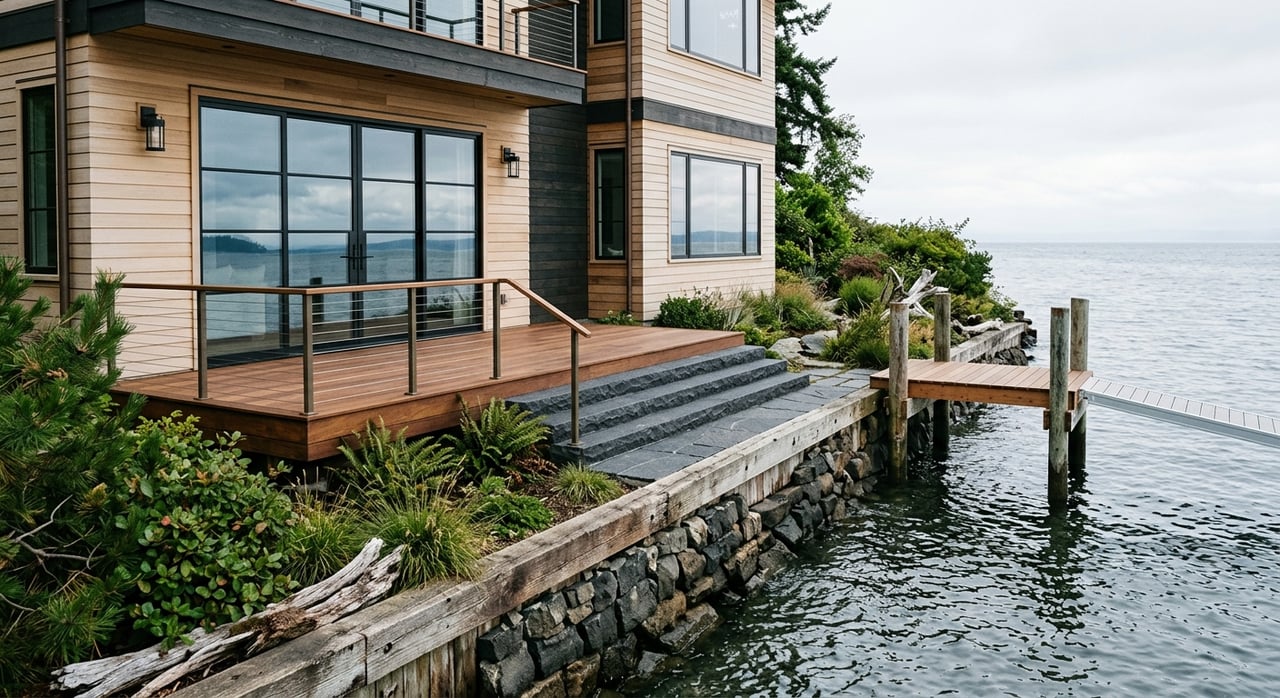
A water view can change how a home feels the moment you walk in. In Port Orchard, that appeal is real, but so are the extra rules that come with shoreline property. If you are thinking about buying a waterfront or view home here, it helps to know what affects value, what can limit future plans, and which questions to ask before you commit. Let’s dive in.
Why Port Orchard draws waterfront buyers
Port Orchard sits on Sinclair Inlet and is closely tied to the water. The city highlights waterfront dining, marina access, ferry connections, the Bay Street Pedestrian Path, and views of the Olympic Mountains and Naval Shipyard as part of its identity.
That makes sense if you are shopping for a lifestyle as much as a house. Some buyers want direct shoreline access, while others care more about a strong water view and easy access to downtown or the shoreline trail.
Waterfront and view homes are not the same
This is one of the most important distinctions to make early. A true waterfront home may sit within the city’s shoreline jurisdiction, while a view home may not touch the water at all but still benefit from sightlines, elevation, and nearby public shoreline access.
In Port Orchard, shoreline jurisdiction is broader than many buyers expect. The city says it includes Puget Sound waters within city limits plus land extending 200 feet landward from the ordinary high water mark.
That means a property can feel like a regular residential purchase on the surface but still come with shoreline-related limits. If you are buying for views, future remodel plans, or outdoor improvements, that distinction matters.
What types of waterfront homes you may see
Port Orchard’s shoreline inventory is not one-size-fits-all. The city’s shoreline plan includes residential areas intended for single-family or multifamily use, but it also includes higher-intensity shoreline areas tied to commercial, mixed-use, transportation, and industrial settings.
In practical terms, you may find detached homes, more urban waterfront settings near downtown, or properties where the surrounding use pattern affects privacy, access, and future redevelopment. A home on the water can offer a very different experience depending on where it sits along the shoreline.
A small 2024 sample from the Kitsap County Assessor for the Port Orchard Waterfront neighborhood showed waterfront sales ranging from $125,000 to $739,000. That range is a useful reminder that condition, size, location, and shoreline characteristics can move pricing dramatically, even within one area.
Why rules matter so much on the shoreline
Buying near the water is not just about enjoying the setting. In Port Orchard, shoreline development must comply with the city’s Shoreline Master Program, zoning code, critical areas rules, and the view protection overlay district where applicable.
That can affect what already exists on the property and what you may want to do later. A deck expansion, shoreline stairs, dock work, stabilization project, or even redevelopment plans may require more review than you would expect with a non-waterfront home.
For view-home buyers, the city’s view protection overlay district also matters. If your value is tied to a view corridor, nearby height and placement rules may influence how durable that view is over time.
Docks and moorage need close review
Many buyers assume a waterfront home automatically means easy dock rights or future moorage options. In Port Orchard, that is not a safe assumption.
The city’s Shoreline Master Program says moorage for a single-family residence is treated as water-dependent only when it is designed and used to access watercraft and other moorage is not available or feasible. The city also prefers mooring buoys over docks or floats and prefers shared moorage where feasible.
There are also size limits in the rules. Residential piers or docks are capped at 6 feet in width, and ramps are capped at 4 feet in width.
If a property is advertised with dock potential, buoy potential, or private moorage, you will want to confirm what is actually permitted and documented. That is very different from simply seeing a shoreline lot on a map.
Bulkheads and shoreline stabilization affect cost
Shoreline condition can have a major impact on both value and future expense. Port Orchard notes that Sinclair Inlet is highly urbanized and about 89% armored, which gives you a sense of how common shoreline modifications already are in this area.
At the same time, new structural stabilization is regulated. The city says new development should avoid future stabilization when feasible, and new hard stabilization is generally limited to protecting existing principal structures or supporting water-dependent uses.
The city also prefers soft or hybrid stabilization approaches when possible. If there is an existing bulkhead, replacement is expected to be landward of the ordinary high water mark and not waterward of the existing structure.
For you as a buyer, that means a bulkhead is not just a feature. It may represent maintenance needs, engineering questions, permit history, and future limitations that should be understood before closing.
Permits can shape future plans
One of the biggest surprises for waterfront buyers is that permit status can affect both use and resale value. Port Orchard’s rules say a project may involve a shoreline exemption, substantial development permit, conditional use permit, or variance, depending on the work.
Just as important, an exemption from a substantial development permit does not exempt a project from the Shoreline Master Program, zoning rules, or other permit requirements. In short, “no major permit needed” does not always mean “no shoreline review needed.”
If you are buying with plans to add or change something, it is smart to verify those plans before you remove contingencies. That is especially true for shoreline stairs, retaining features, moorage improvements, additions, and major exterior work.
Views have value, but view permanence matters
A beautiful view can support price, but not all views are equally protected. In Port Orchard, public shoreline views are an important part of city policy, and the city specifically notes water views from SR 166, Bay Street, and Beach Drive.
The city also works to preserve opportunities to view the shoreline and water from public property and roadways. For private homes, though, the bigger question is whether your specific view depends on topography, setbacks, neighboring redevelopment, or overlay rules.
That is why buyers should think beyond today’s listing photos. A wide, elevated, well-sited view may hold value differently than a narrower view framed between structures.
Flood and site constraints should be part of your search
Waterfront and near-water properties often come with added site review. Port Orchard provides planning maps that include flood zones, environmental layers, state-owned aquatic land, and the view protection overlay district.
The city’s Shoreline Master Program also includes flood hazard reduction and sea-level-rise goals. It discourages certain development in 100-year flood areas and requires scientific and engineering documentation for new structural flood-hazard measures.
This does not mean every waterfront purchase is a problem. It does mean you should understand the site conditions early, especially if you may remodel, rebuild, or make shoreline changes in the future.
Best questions to ask before you buy
If you are serious about a waterfront or view home in Port Orchard, these are some of the most useful questions to ask during due diligence:
- Is the property inside shoreline jurisdiction?
- What shoreline environment designation applies?
- Are any docks, mooring buoys, bulkheads, stairs, or shoreline walls permitted and documented?
- Would your planned work require a shoreline exemption, substantial development permit, conditional use permit, or variance?
- Does the property fall within flood, environmental, or state-owned aquatic land map layers?
- Is there shared moorage, a public access easement, or another shoreline-use condition that affects privacy or use?
If the answer to any of these questions raises concerns, it is worth taking the next step with the city permit center. Depending on the property and your plans, site-specific engineering input may also be appropriate.
How to evaluate value more clearly
In Port Orchard, the word waterfront does not tell you enough by itself. Value can be shaped by frontage quality, view orientation, shoreline condition, permit history, access, and the cost of future maintenance or improvements.
That is one reason two homes with similar square footage can have very different pricing. A home with a stable shoreline setup, documented improvements, and a durable view may offer a very different risk profile than one with deferred shoreline issues or unclear use rights.
For buyers, the goal is not just finding the prettiest setting. It is finding the right mix of lifestyle, usability, and long-term value for your plans.
A smart approach for Port Orchard buyers
Buying a waterfront or view home in Port Orchard can be incredibly rewarding, but it pays to look past the romance of the setting. The best purchase is usually the one where the lifestyle fits, the rules are understood, and the property’s strengths and limits are clear from the start.
If you want experienced guidance while comparing waterfront, water-view, condo, or residential options in Port Orchard and the surrounding South Sound, Stephanie Patrick offers thoughtful, local support to help you evaluate the details with confidence.
FAQs
What does waterfront mean for a Port Orchard home purchase?
- In Port Orchard, waterfront can mean more than direct water frontage. A property may be near the shoreline and still fall within shoreline jurisdiction, which includes land extending 200 feet landward from the ordinary high water mark.
What should you verify before buying a Port Orchard waterfront home?
- You should verify shoreline jurisdiction, permit history, documentation for docks or bulkheads, flood and environmental map layers, and whether future improvements may need shoreline review or permits.
Can you add a dock to a Port Orchard waterfront property?
- Possibly, but it depends on the property and the city’s shoreline rules. Port Orchard prefers mooring buoys over docks or floats in some cases, prefers shared moorage where feasible, and applies specific dimensional standards to residential docks and ramps.
Do Port Orchard view homes have special rules too?
- Yes, some do. The city says shoreline development must comply with the view protection overlay district where applicable, so nearby height, placement, and redevelopment rules may matter even if the home is not directly on the shoreline.
Why do Port Orchard waterfront home prices vary so much?
- Prices can vary based on more than the waterfront label alone. View permanence, shoreline condition, frontage quality, access, permits, and required improvements can all affect value.
Where can you start due diligence on a Port Orchard shoreline property?
- A strong starting point is reviewing the city’s planning maps for flood zones, environmental layers, state-owned aquatic land, and the view protection overlay district, then checking with the permit center if the property or your plans raise shoreline questions.
